Breweries under pressure: why operational performance is becoming a strategic lever
As volumes decline and costs rise, breweries need better operational control. Indao shows how industrial data can help protect margins and support smarter production decisions.
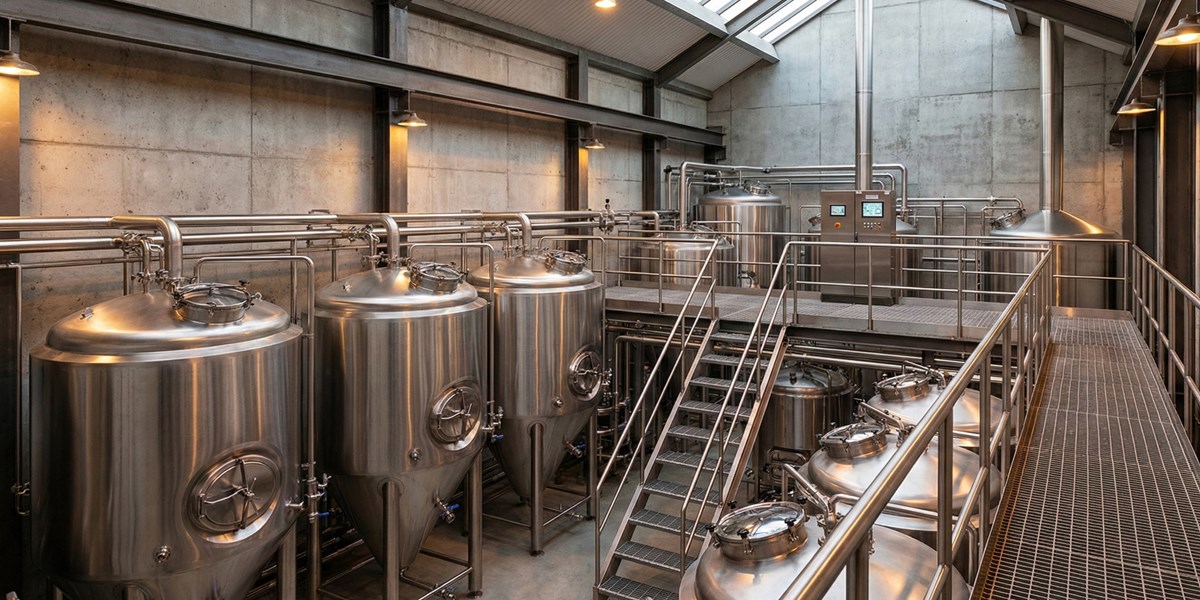
When the market contracts, every industrial decision matters more
In a recent article published in June 2026 in Trends-Tendances, journalist Camille Delannois describes the Belgian brewing sector as an industry under pressure. Declining volumes, rising production costs, slowing exports, changing consumption habits, the rise of non-alcoholic beer, and the diversification of formats and products: Belgian breweries are no longer facing a simple market fluctuation. They are entering a deeper transformation phase.
This observation matters because it goes far beyond commercial challenges. Of course, breweries must continue to innovate, adapt their offering and find new growth opportunities. But in a context where volumes are decreasing and costs remain high, another lever becomes central: operational performance.
Producing better, consuming less, reducing invisible losses, better understanding differences between lines, recipes or batches, and detecting deviations earlier: these are no longer just continuous improvement topics. They are becoming conditions for profitability.
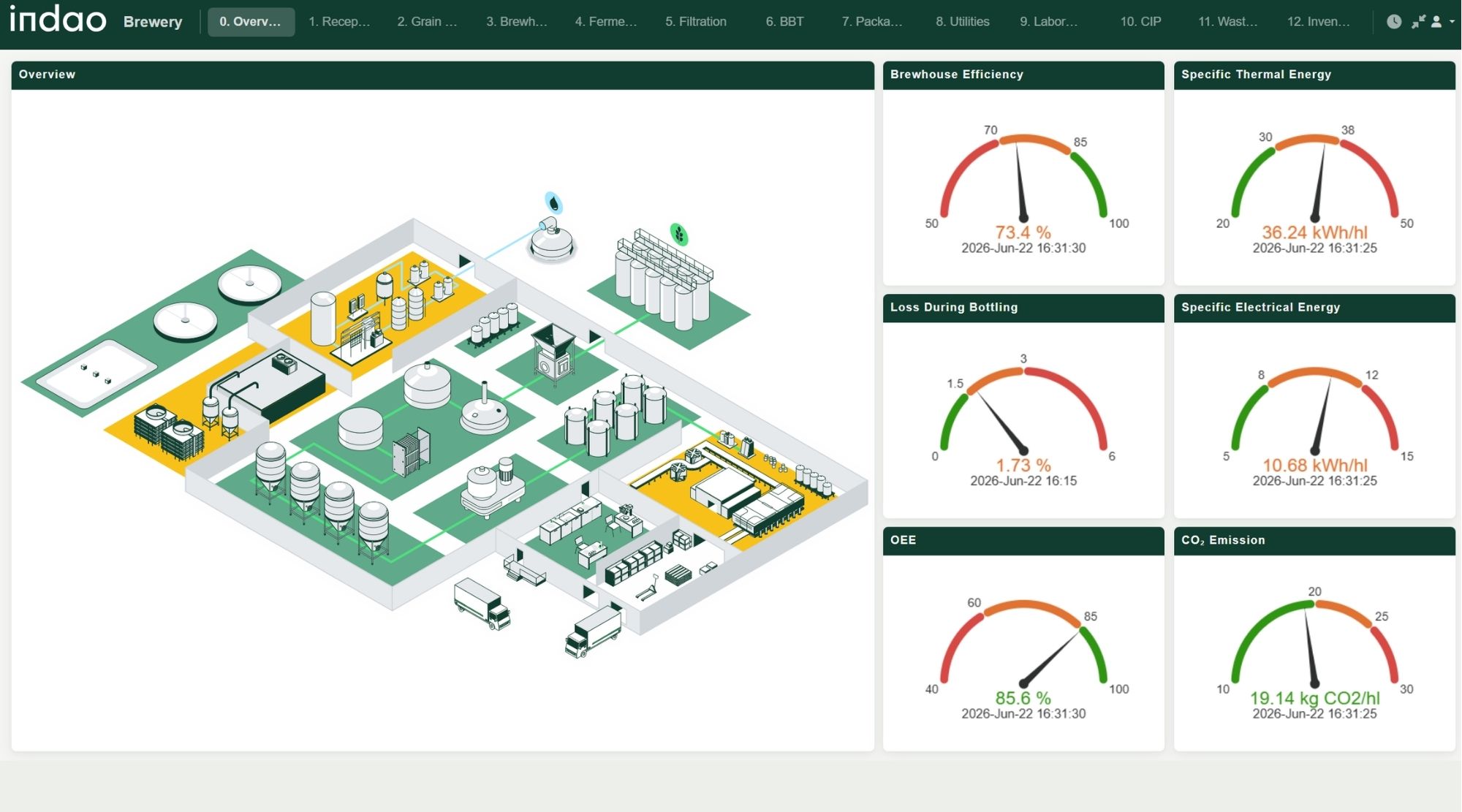
A consolidated view of key performance indicators enables breweries to monitor, in real time, the levers that impact costs, yield and environmental footprint.
Pressure no longer comes from a single factor
The Trends-Tendances article highlights a reality that has become structural for Belgian brewers: the domestic market is contracting, exports no longer automatically compensate for this decline, and consumers are changing their behaviour.
They drink less, but more selectively. They are increasingly interested in non-alcoholic alternatives, lighter products, different formats and more specific beverages. For breweries, this evolution creates new opportunities, but it also makes operations significantly more complex.
A more diversified range often means more recipes, more format changes, more quality constraints, more cleaning cycles, more transitions between production runs and more parameters to monitor. At the same time, energy, raw material, logistics and industrial investment costs directly weigh on margins.
In this context, the question is no longer only: “How can we sell more?”
It also becomes: “How can we better control what each hectolitre produced really costs?”
Profitability also depends on weak signals
In a brewery, a significant part of performance is not always immediately visible.
Slightly higher-than-normal steam consumption.
A brewhouse yield that gradually deteriorates.
A temperature deviation during a critical phase.
A CIP cycle that lasts longer than necessary.
A packaging line that is less stable on certain formats.
Water or cooling consumption increasing without a clearly identified cause.
Material losses varying depending on recipes, teams or production campaigns.
Taken individually, these deviations may seem minor. But repeated across hundreds of batches, they eventually affect costs, margins and the ability to produce reliably.
This is precisely where industrial data becomes a decision-making lever. Not to add another layer of reporting, but to make visible the deviations that often remain scattered across equipment, production files, quality histories, energy data and field experience.
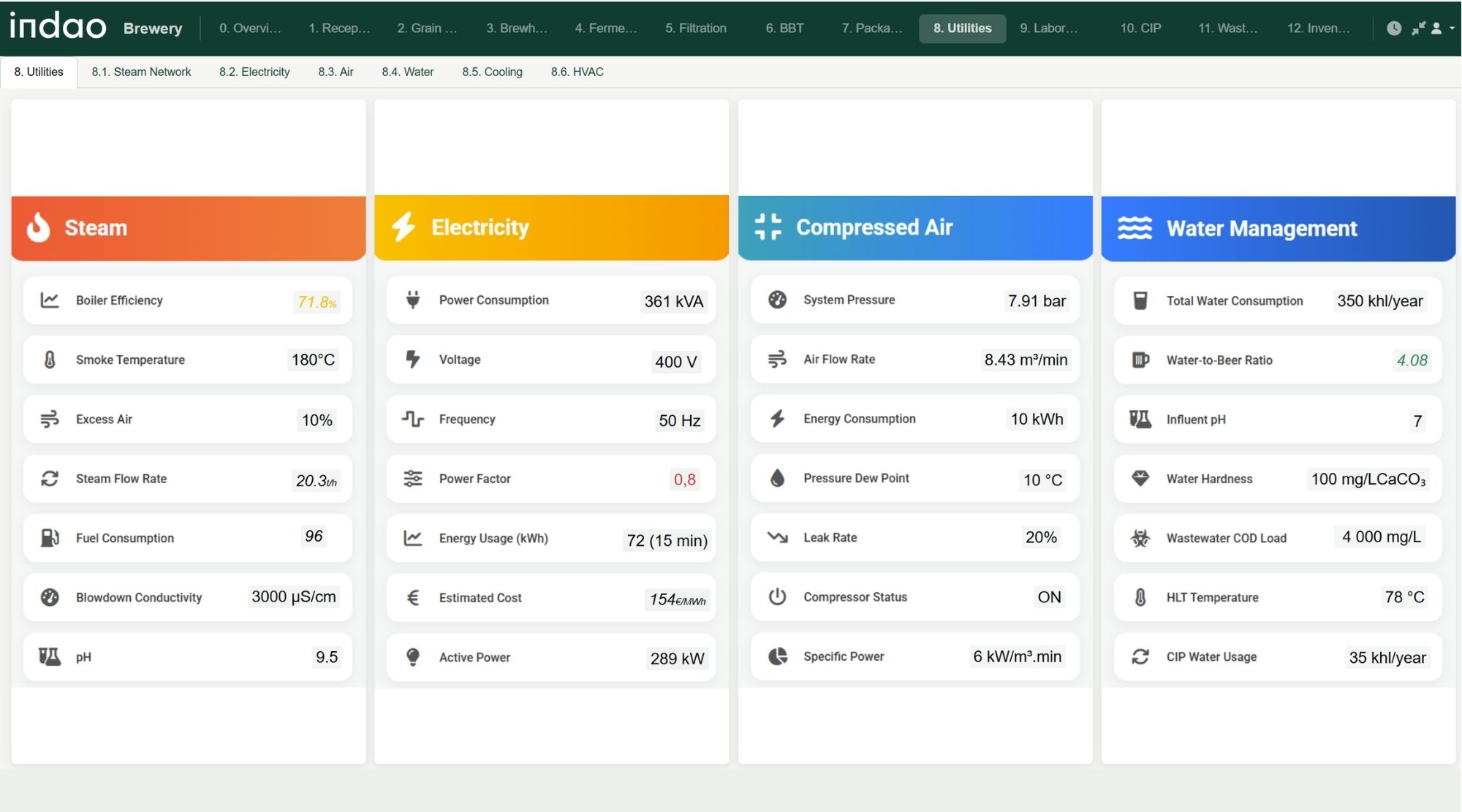
Monitoring utilities - steam, electricity, compressed air and water - helps identify overconsumption and connect energy costs to production realities.
Diversifying the offer, yes. But with finer operational visibility.
The development of non-alcoholic beer, lighter beers, organic ranges, gluten-free products, cans and new types of beverages responds to a real market evolution. But this diversification raises a very concrete question for breweries: do all these products behave in the same way in production?
Do they have the same yields?
The same energy consumption?
The same cleaning constraints?
The same packaging losses?
The same levels of quality stability?
The same impact on existing lines?
Without detailed visibility, it becomes difficult to distinguish what is commercially promising from what is industrially profitable. A new product range may very well respond to market demand while generating more complexity, losses or overconsumption.
To manage this complexity, breweries need readable indicators connected to field realities: performance by batch, recipe, line, format, period or product type. This granularity is what makes it possible to understand where to act first.
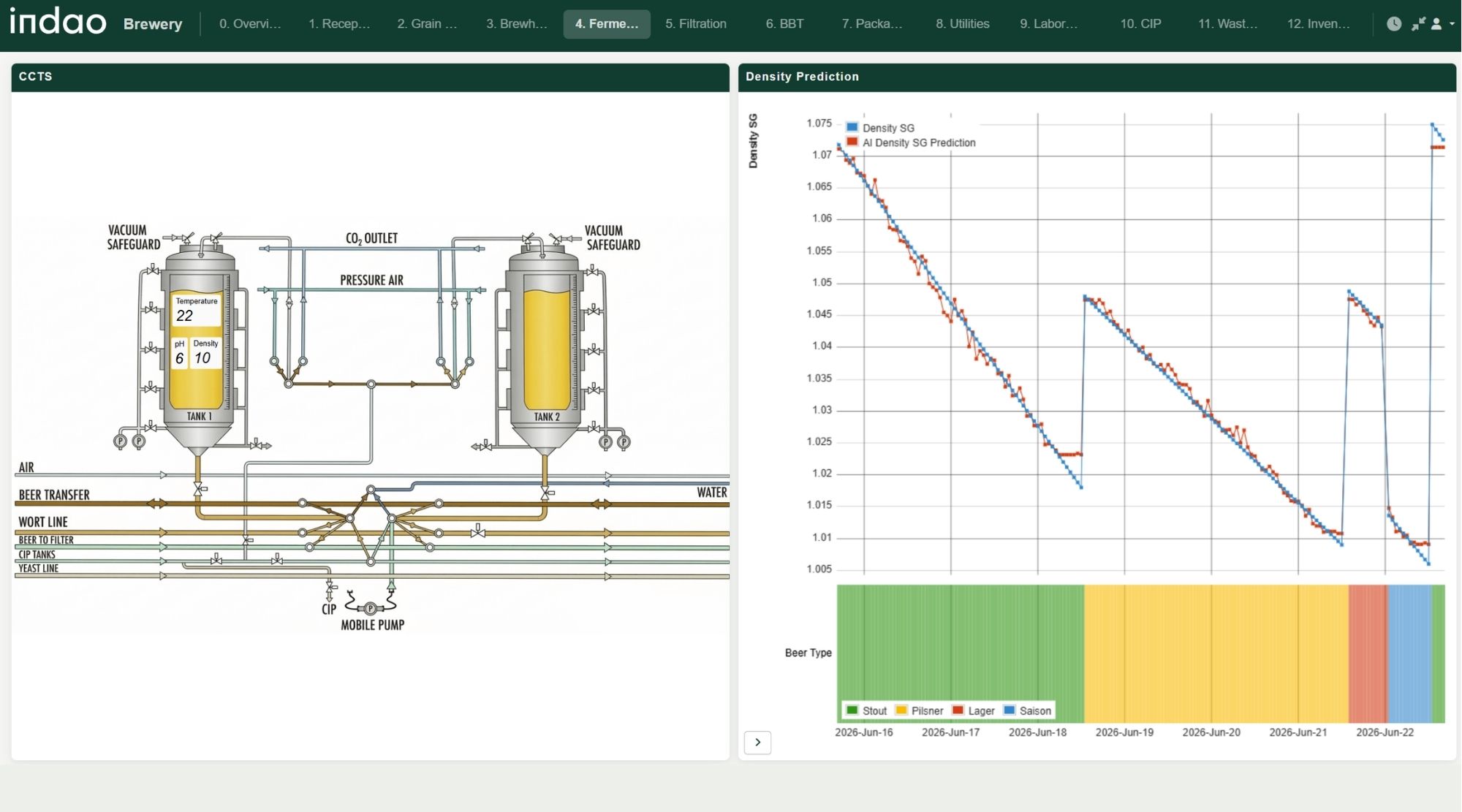
Comparing fermentation profiles and density predictions helps better monitor recipe stability, batch quality and differences in behaviour between beer types.
Industrial investments must also be objectified
The Trends-Tendances article also shows that breweries continue to invest: canning lines, wastewater treatment plants, facility modernisation and adaptation of production tools.
These investments are necessary to prepare for the future. But their value also depends on the ability to measure their real impact.
Does a new line actually reduce costs?
Does a modernised treatment plant improve discharge stability or water consumption?
Does new equipment reduce downtime, losses or changeover times?
Are the expected gains visible in production data?
In an industry under pressure, every investment must be monitored, compared and justified. Data makes it possible to move from a general perception of performance to a more objective reading: before and after, line by line, product by product, indicator by indicator.
Indao’s role: turning brewery data into operational decisions
Indao helps industrial companies connect, structure and leverage their operational data to better manage performance. For breweries, this means making production, energy, quality and maintenance data more readable, more comparable and more actionable.
The goal is not to replace brewers’ expertise. On the contrary, it is to give teams a clearer view of what is really happening in their operations.
With an advanced analytics approach applied to industrial environments, Indao can help breweries to:
- monitor energy, water, steam, cooling or CO₂ consumption by batch, product or line;
- compare performance across recipes, formats, equipment or production campaigns;
- detect yield, quality or consumption deviations earlier;
- identify invisible losses that weigh on margins;
- objectify investment decisions and the gains achieved;
- help field teams prioritise the actions that will have the greatest impact.
In a market where volume is no longer enough to offset cost pressure, this ability to make decisions based on reliable signals becomes strategic.
Producing more accurately, not just producing more
The Belgian brewing sector still has major strengths: know-how, diversity, local roots, international recognition and innovation capacity. But the current context is forcing breweries to gain better control over their industrial performance.
Future growth drivers will not come only from new products or new markets. They will also come from a better understanding of existing operations.
In this new environment, producing more will not always be possible. Producing more accurately, however, becomes essential.
This is where industrial data becomes truly meaningful: not as an end in itself, but as a concrete lever to preserve margins, reduce losses, secure quality and help breweries make better day-to-day decisions.
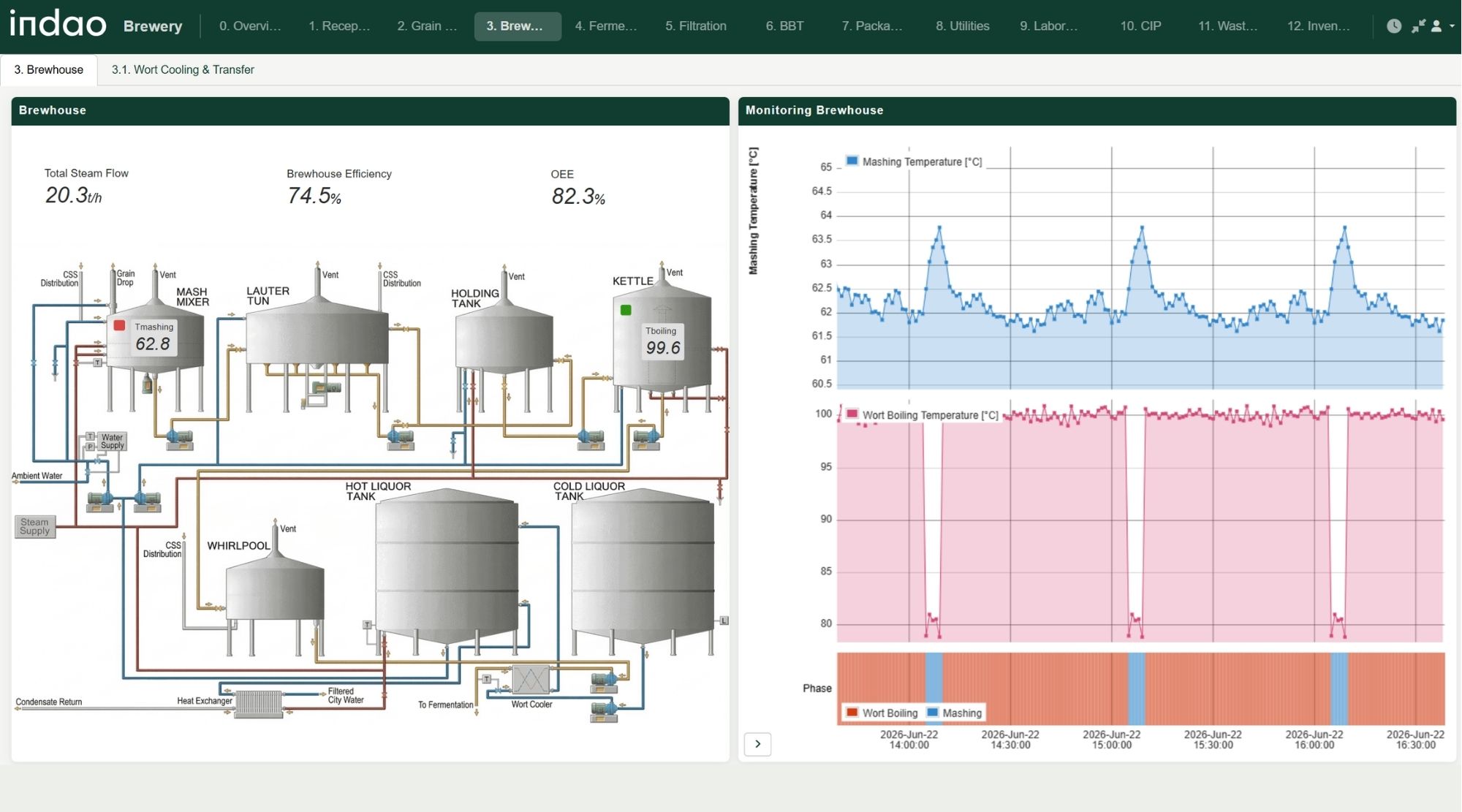
At brewhouse level, monitoring temperatures, production phases, steam flow and yield makes it possible to better understand differences between batches and stabilise performance.
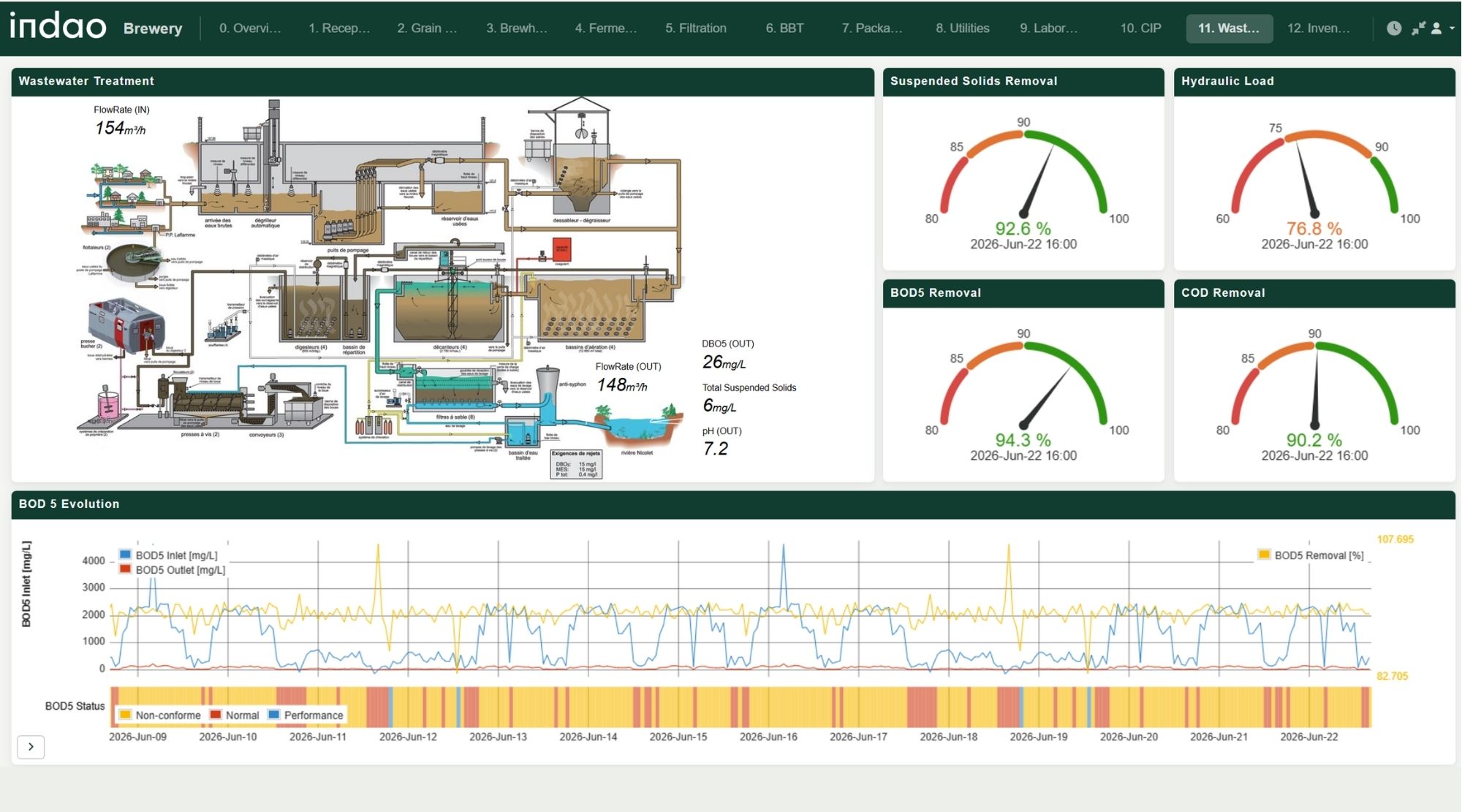
Wastewater treatment monitoring makes it possible to track hydraulic loads, removal performance and key parameters related to environmental compliance.
FAQ: better managing operational performance in breweries
Which KPIs should a brewery monitor to better control its costs?
A brewery can start by monitoring a few key indicators: energy consumption per hectolitre produced, water, steam, cooling and compressed air consumption, brewhouse yield, packaging losses, OEE, quality stability, downtime and CIP cycle performance. The challenge is not to multiply dashboards, but to connect these KPIs to recipes, lines, batches and production periods in order to understand what really impacts costs.
How can data help reduce losses in brewery production?
Losses are not always immediately visible. They can come from deteriorating yield, progressive overconsumption, a less stable format change, an overly long cleaning cycle or repeated quality deviations. By consolidating production, energy, quality and maintenance data, teams can identify more quickly where losses appear, quantify them and prioritise corrective actions.
Why monitor energy, water, steam and cooling consumption by batch?
Monthly global monitoring provides a trend, but it does not always make it possible to understand the origin of deviations. By analysing consumption by batch, recipe, line or format, a brewery can compare similar productions, detect deviations and connect consumption to real production conditions. This granularity is essential to act on costs without compromising quality.
How can breweries better manage product diversification, such as non-alcoholic or lighter beers?
Diversification creates new commercial opportunities, but it also makes operations more complex. Each product may have its own yields, fermentation constraints, cleaning needs, energy consumption or packaging losses. By comparing performance by beer type, recipe or format, teams can better distinguish what is commercially attractive from what is industrially controlled and profitable.
Do advanced analytics replace brewers’ expertise?
No. Advanced analytics do not replace field experience, brewing know-how or team decisions. They strengthen them. The objective is to make industrial signals more readable, detect deviations earlier and provide operators, production managers, quality teams, maintenance teams and energy managers with reliable information to make faster and clearer decisions.