Turning Cogeneration Data into Impact with AI and Thermodynamic Models
How can cogeneration plants turn data into better decisions? This article shows how Indao combines thermodynamic models and AI-based monitoring to detect drifts earlier, improve visibility and reduce unplanned downtime.
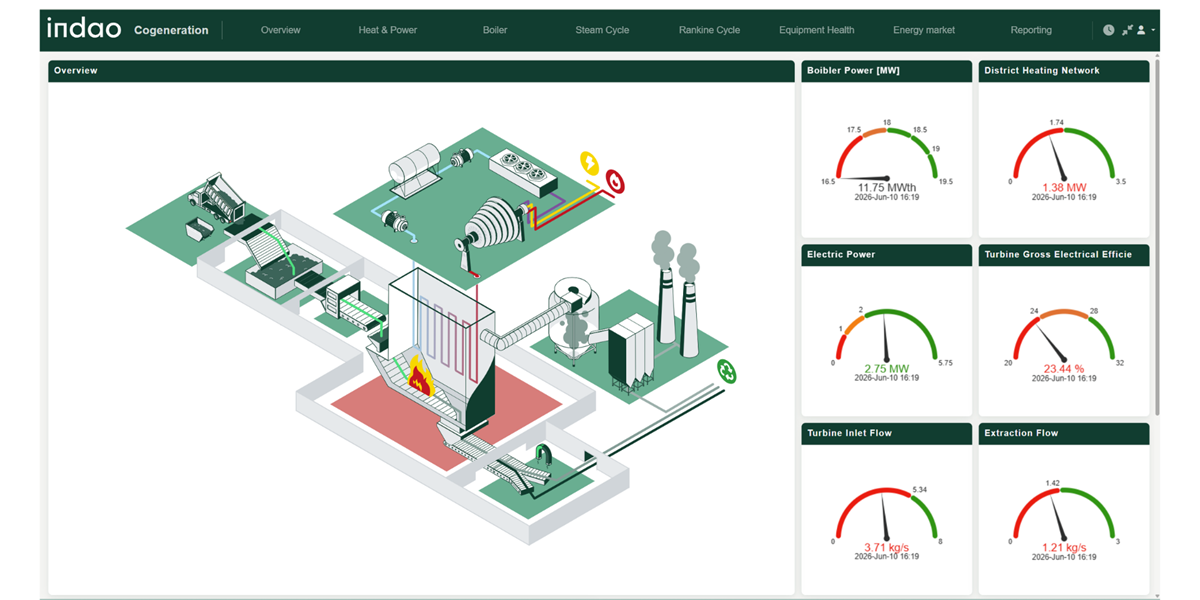
Turning Cogeneration Data into Impact: How AI combined with Thermodynamic Models is Redefining Efficiency for Biomass and CHP Plants
This article was written by Joanna Huddleston, COO, and Claire Lefèvre, Analytics Project Engineer at Indao.
Abstract: For cogeneration operators, the challenge is not a lack of data, but knowing how to turn that data into faster, better decisions. By combining thermodynamic context with AI-based monitoring, it becomes possible to improve visibility on performance, detect anomalies earlier, and reduce the risk of unplanned downtime in critical assets. The key takeaway is simple: hybrid monitoring that combines physical and AI models can help operators act earlier and more confidently, while still keeping engineering knowledge at the center of decision-making.
Inside a cogeneration plant, distributed control systems (DCS) and historians ingest thousands of tags in real-time. With steam flow rates, temperatures, and pressures constantly fluctuating, not to mention the impacts of changing ambient conditions and soot blowing, increasing volatility of energy markets and tightening environmental regulation, how can operators and engineers truly know: Is my production optimal right now? Is my process actually healthy?
Relying on manual data aggregation or static SPC (Statistical Process Control) thresholds is no longer economically viable. Data is a true goldmine for improvement, but only when paired with the right operational intelligence. Introducing Indao, an industrial analysis and AI platform designed to bridge this gap.
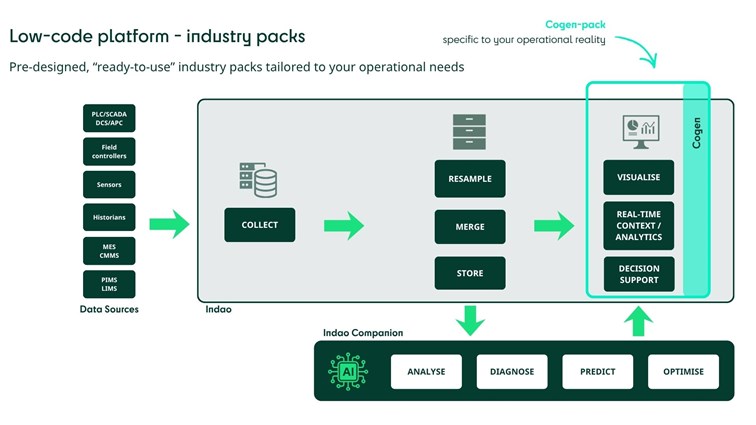
A Belgian scale-up, Indao specializes in automating data collection and utilizing advanced AI models to maximize overall performance, optimize energy conversion, and stabilize production operations 24/7. By layering pre-designed, ready-to-use industry packs, such as a Cogen Asset, directly over existing factory data sources (like SCADA, PLC, and Historians), Indao empowers field teams to decide better and produce smarter.
Navigating the Operational Complexities of Cogeneration
Operating a combined heat and power (CHP) plant means navigating a complex web of interrelated variables. Teams face constant challenges that directly impact the bottom line:
- Feedstock Heterogeneity & Combustion instability: In biomass and waste-to-energy CHPs, variations in fuel quality and moisture content require continuous manual tweaks, leading to operational drifts and performance discrepancies between different operating teams.
- Information Overload: High instrumentation density means operators are often overwhelmed with data, causing critical insights and subtle micro-anomalies to remain hidden.
- Asset Degradations & Unplanned Downtime: Unplanned shutdowns on critical components like biomass conveyors, boilers, and turbine heat exchangers disrupt energy supply commitments and erode profitability.
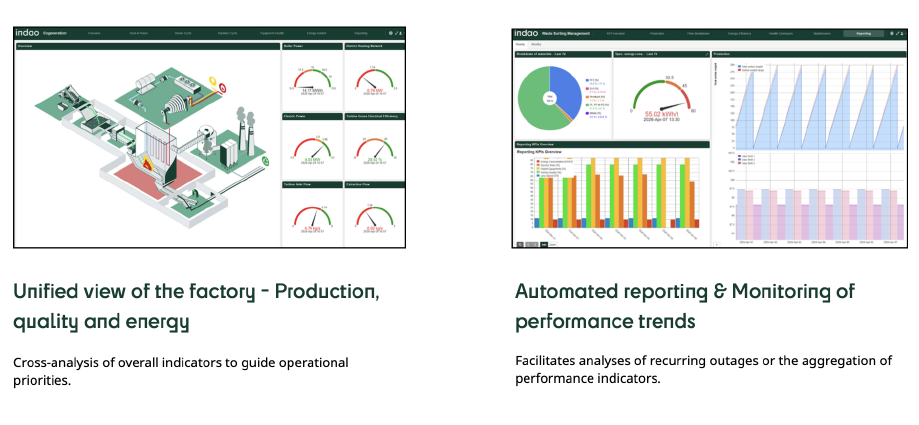
Indao overcomes these obstacles by making all process and production data easily accessible, providing a unified view of production, energy and equipment health.
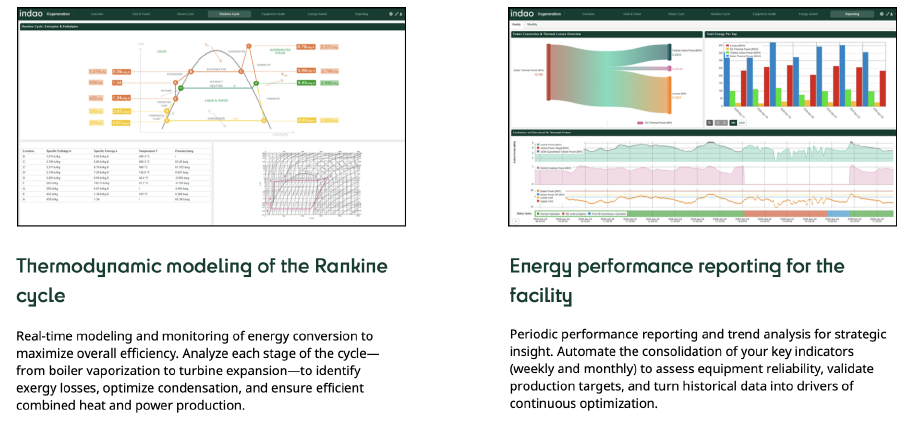
By applying real-time thermodynamic modeling (such as the Rankine cycle), combined with AI data-driven models, the platform evaluates losses and identifies process drifts to maximize overall combined heat and power efficiency.
Real-World Impact: Resolving Process Drifts at 2Valorise
At 2Valorise, a leading industrial site specializing in energy recovery from primarily bio-mass, Indao’s models were deployed to continuously monitor thermal asset performance and predict subtle deviations before they triggered wider issues.
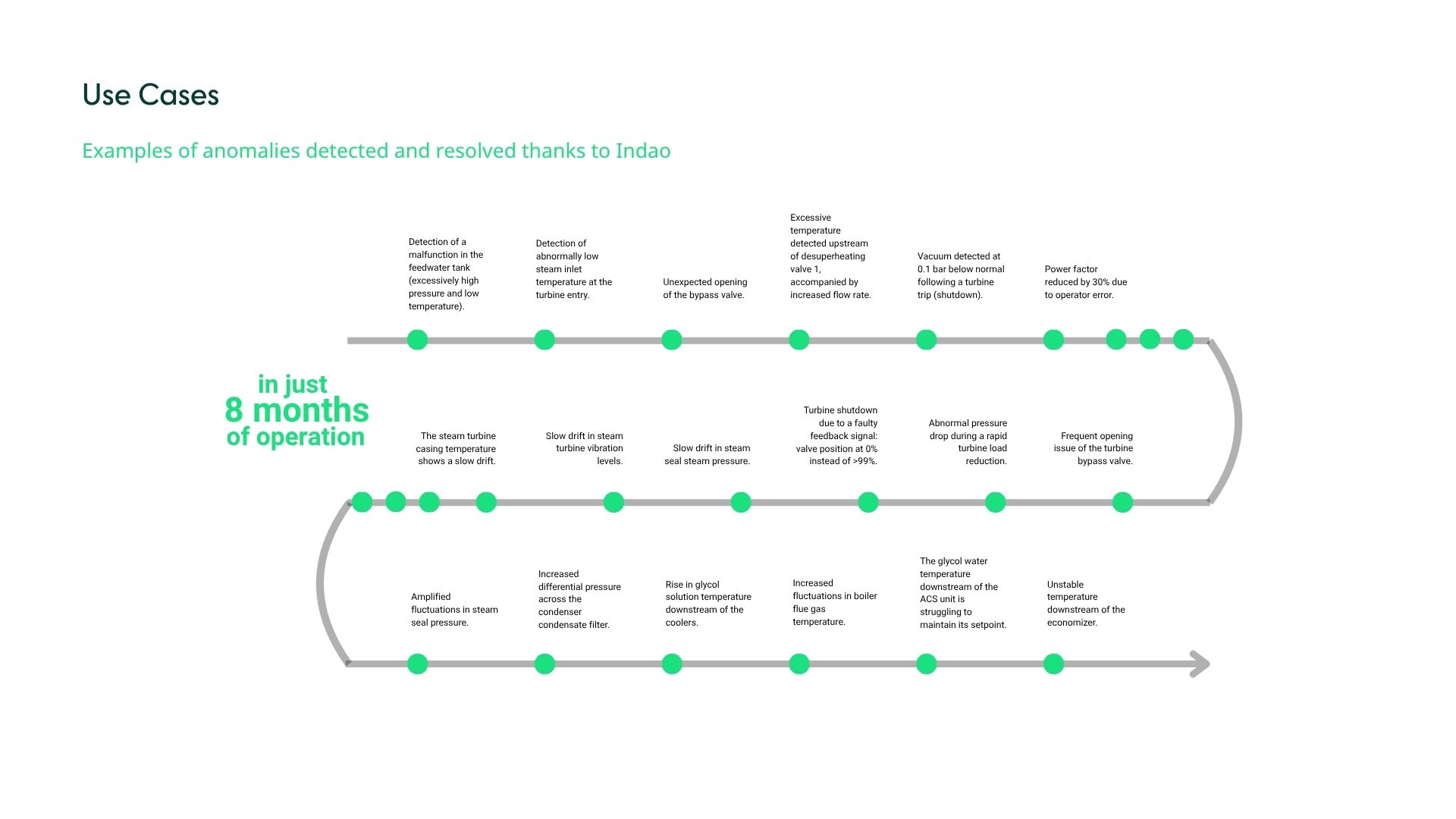
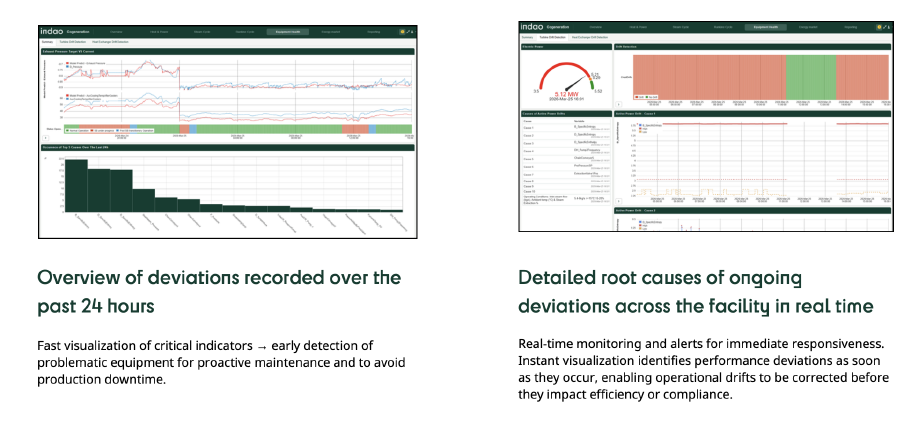
Indao’s solution was installed to collect over 2700 variables in real-time. By training Machine Learning (ML) models on historical baseline regimes, the platform established a dynamic operating digital twin. During the first 8 months of deployment, Indao’s anomaly detection and predictive models identified and helped resolve dozens of process deviations. One particularly critical incident involved a complex turbine trip event.
Predictive Maintenance Case Study: Detecting Vacuum Deviations
Following a turbine trip, operators monitored standard parameters, however, due to highly dynamic boundary conditions, including fluctuating boiler steam generation, steam inlet and extraction flows as well as weather conditions, it remained difficult for them to know: is my current vacuum level behaving as expected. Indao’s multivariate anomaly detection model and predictive electricity model flagged an alert: the vacuum pressure was detected at 0.1 bar below expected levels following the turbine trip.
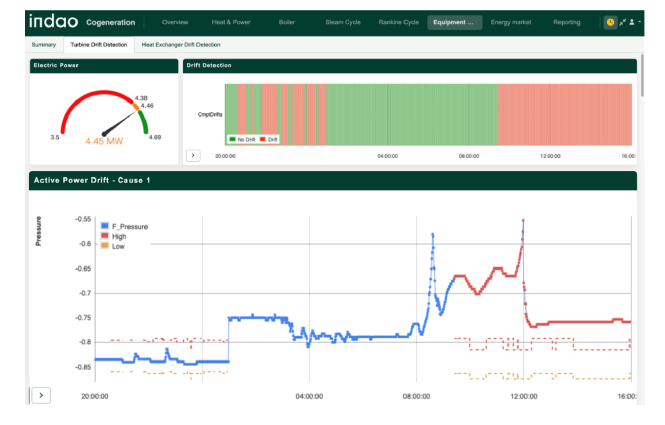
The predictive model evaluated current external conditions (ambient weather forecasting) alongside operating parameters (steam inlet and extraction flows, cooling water temperatures, etc) to determine electricity production was below target and that a 0.1 bar change in vacuum pressure was statistically abnormal for that post-trip phase.
Unlike standard alarms or SPC-type approaches, Indao’s AI model’s power comes from:
- Multivariate model
- Capable of analysing multiple operating modes, including the influence of seasonality, boiler load, etc.
- Identifies abnormal conditions despite important variability
- Pinpoints the drifting variables
- Provides a range for each drifting variable to return to normal conditions
By highlighting this deviation early via intuitive dashboards, the platform allowed the engineering team to pinpoint the root cause, allowing them to plan for maintenance at the next shut down. Correcting this drift prevented extended production downtime and protected the steam turbine from potential long-term degradation.
Slow Drift Case Study: Detecting Turbine vibration drift
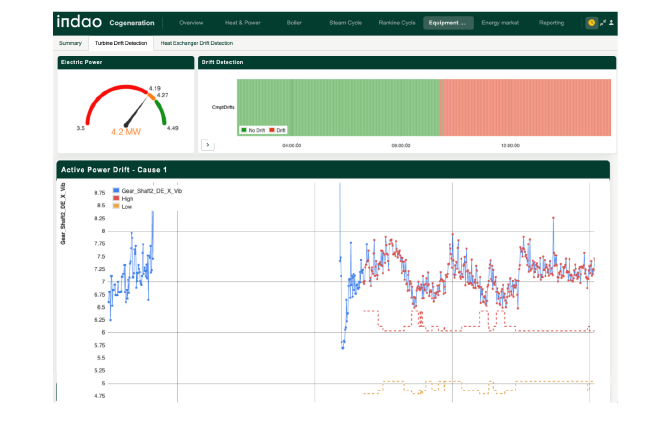
Shortly after commissioning, Indao's drift detection AI model began highlighting subtle issues with the turbine's vibrations. Crucially, these vibration levels were well below the standard SCADA alarm thresholds, but the slow, continuous drift was flagged as abnormal by the model. This early alert provided the operational team with the necessary visibility to immediately engage the turbine constructor while the asset was still under guarantee.
By acting proactively, they were able to plan the required mechanical maintenance to coincide with the next scheduled minor maintenance window. Had the team waited until the vibrations hit SCADA limits, they would have risked unplanned downtime, potentially falling outside the guarantee period, and facing significantly larger, more costly repair issues.
“Indao has improved our operational efficiency by enabling us to monitor plant performance, detect deviations and diagnose their causes. Thanks to additional sensors and data analysis, downtime has been minimised, maximising overall efficiency.” - Filip Lesaffer, CEO, 2Valorise
Proven, Measurable Results
The deployment of Indao across demanding industrial environments demonstrates that AI is no longer an optional luxury, it is a core tool for strategic asset management. Cogen projects carried out with the platform typically deliver:
- Direct impact: +/- 1 % on energy production
- Indirect Impact:
- Reduced unplanned downtime
- Better operator understanding of the process
- Easier system operation for personnel
- Time savings in production monitoring
- More time available for other tasks
By pairing data integrity with automated operational intelligence, Indao ensures that your plant captures and preserves site-specific expertise, empowering your operating teams to steer complex cogeneration processes with precision.
Ready to turn your plant's data into lasting performance? Let’s discuss how the Indao Cogen can optimize your facility. Contact us or visit www.indao.ai.